


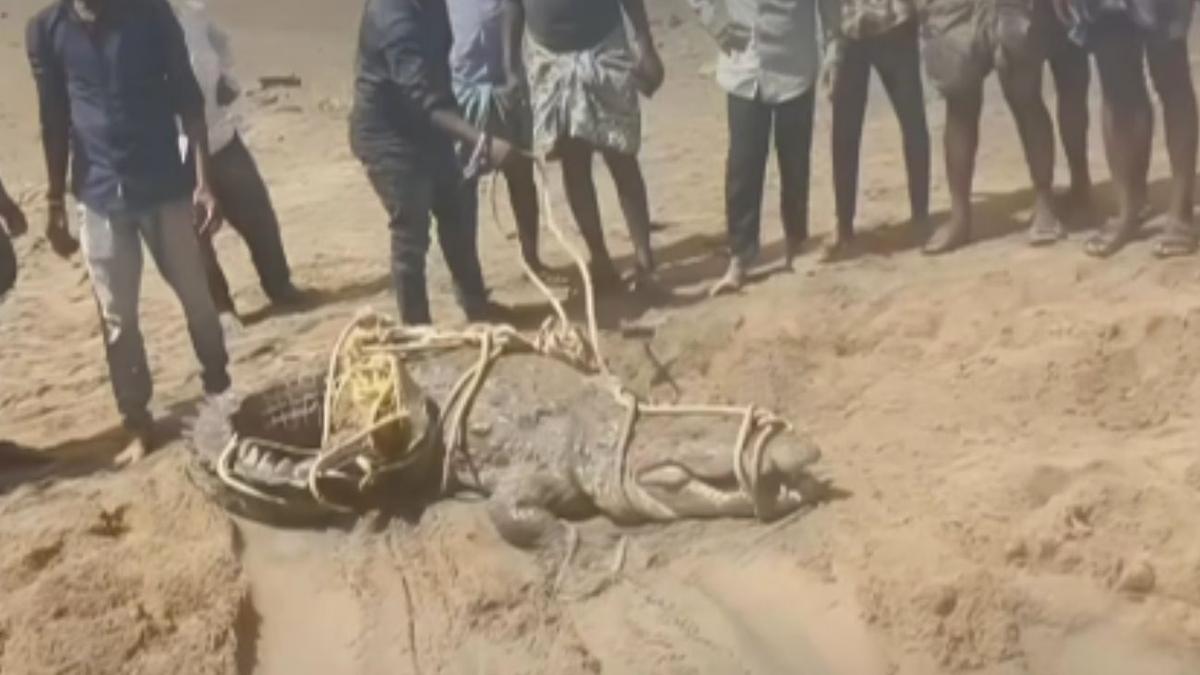
Villagers Capture Crocodile Stranded by Shrinking Tungabhadra River in Kurnool
Kurnool, India — In a dramatic incident highlighting the impact of changing environmental conditions, villagers in Kurnool district captured a crocodile that was driven ashore by the receding waters of the Tungabhadra River. The event has sparked both concern and attention, as it underscores the challenges faced by local wildlife amid environmental changes.
The shrinking river, a vital lifeline for the region, has forced many aquatic animals, including crocodiles, to venture closer to human settlements in search of habitat and food. This particular crocodile found itself stranded near the village, prompting a swift response from the local community.
Key Details:
- Location: The incident occurred in a village near the Tungabhadra River in Kurnool district, Andhra Pradesh.
- Community Response: Villagers, upon spotting the crocodile, quickly gathered and captured the reptile. In their attempt to subdue the animal, reports indicate that they resorted to beating it, highlighting the urgent need for wildlife awareness and education in the area.
- Environmental Impact: The receding waters of the Tungabhadra River are a growing concern, affecting both human and animal populations. The river's shrinking is attributed to a combination of factors, including reduced rainfall and increased water usage upstream.
- Authorities' Involvement: Local authorities were notified of the incident, and wildlife officials are expected to intervene. They will likely provide necessary instructions on handling such situations in the future to prevent harm to both humans and wildlife.
Instructions and Warnings:
Wildlife experts urge communities in the region to exercise caution and contact local wildlife authorities rather than attempting to capture wild animals themselves. Human interactions with stranded or displaced wildlife can be dangerous, both to people and the animals involved.
As environmental conditions continue to evolve, the incident serves as a poignant reminder of the interconnectedness of human and natural ecosystems. Sustainable water management and increased awareness are essential steps toward ensuring the coexistence of human and wildlife populations in the region.
The authorities are expected to release further information and guidelines to help communities safely navigate similar situations in the future, underscoring the importance of education and preparedness in mitigating human-wildlife conflicts.

 Continue With Google
Comments (0)