


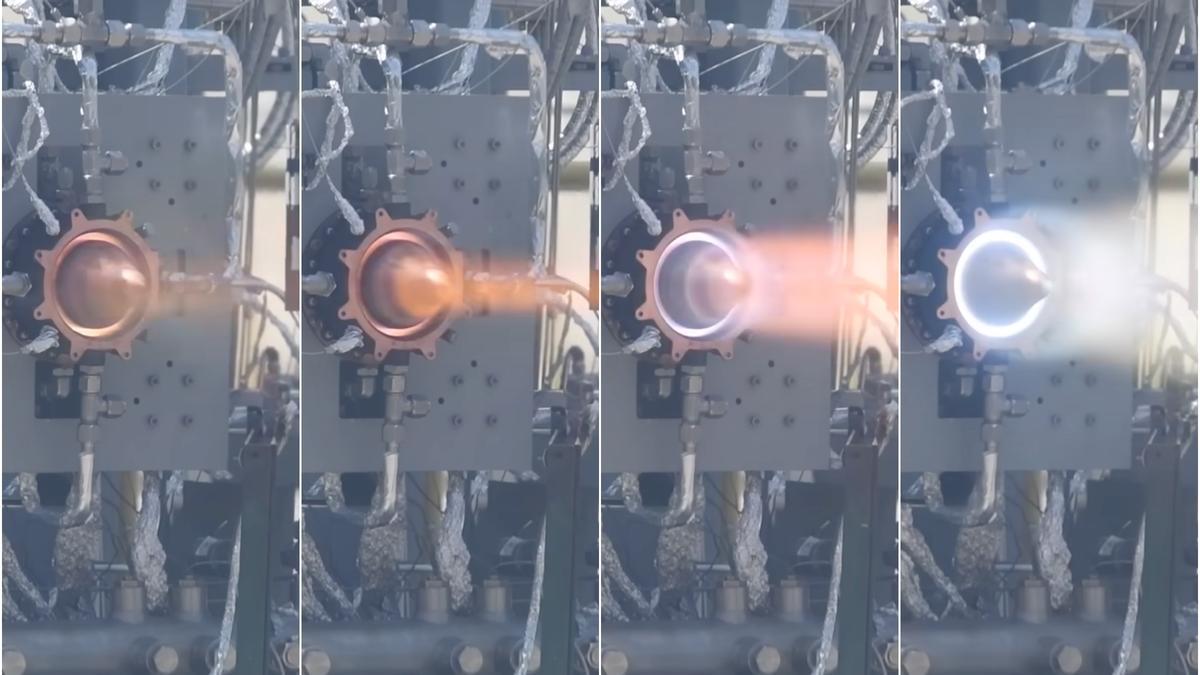
Revolutionizing Space Travel: The Promise of Rotating Detonation Engines
In a groundbreaking development set to transform the future of space exploration, scientists are making strides with Rotating Detonation Engines (RDEs). These engines promise to significantly enhance the efficiency and capability of space travel, potentially ushering in a new era of cosmic exploration.
Key Features and Benefits:
- Increased Efficiency: RDEs operate on a unique principle of continuous detonation, which can potentially deliver higher thrust efficiency compared to traditional rocket engines.
- Cost-Effectiveness: By reducing the amount of fuel needed for space missions, RDEs could lower the costs associated with reaching orbit and beyond.
- Compact Design: The innovative structure of RDEs allows for more compact and lighter engine designs, optimizing space within spacecraft.
Experts believe that the integration of RDEs in spacecraft could dramatically cut down travel time to distant planets, opening up new possibilities for interplanetary travel and exploration. This could pave the way for more ambitious missions and the potential colonization of other celestial bodies.
Challenges and Considerations:
- Technical Complexity: Despite their promise, RDEs present significant engineering challenges that must be overcome before they can be fully implemented.
- Safety Concerns: Ensuring the safety and reliability of these engines remains a top priority, as the technology is still in its experimental stages.
In conclusion, while Rotating Detonation Engines are still under development, their potential to revolutionize space travel is undeniable. As research and testing continue, the dream of faster and more efficient space journeys might soon become a reality.






 Continue With Google
Comments (0)